 Vastrik
≡

I took the header photo on February 20, 2022. Four days later the war would begin, and our lives would split into “before” and “after.” Even the dramatic opening of last year's review, when we were losing our minds after two years of COVID lockdowns, already feels like some naive echo from the past. At least back then we had hope.
There's no hope left. Just darkness and blind fanaticism everywhere you look.
There didn't seem much point in writing a “2022 year in review.” Obviously the war would overshadow everything in every category. Event of the year, disappointment of the year, experience of the year — the same fucking war every time.
We live in a genuine dystopia now, where kindness is unacceptable and condemned, while hatred gets encouraged, pushed to the top, and made the new normal.
Everyone who created things and inspired people is gone. Or lying low. The ones who hated, incited hatred, and destroyed things are heroes now.
Unfortunately, I haven't been able to accept the rules of this new game yet.
I genuinely can't understand how, in the 21st century, you can demonize entire countries and peoples with a snap of your fingers while everyone hoots and cheers. I thought that only happened in Sorokin novels or old newsreels about the Nazis.
Maybe it's because I grew up in Siberia in the ’90s, where basically everyone had one goal: survival. So we didn't really sort people by class, nationality, or color. We judged them by what they did. And even then we always tried to get organized somehow, stick together, help each other out. There was no other way to survive that poverty and cold. Let alone escape it.
That's why, to me, what happened this year was sheer savagery.
Not because I'm a man of high moral principles or yet another “good Russian” hiding behind an Israeli passport.
No, I'm an absolutely appalling Russian who fucked off to Europe straight out of uni. All I'd wanted since I was a kid was to live somewhere you didn't have to spend your life surviving and overcoming adversity, where people would just let you get on with making cool stuff. That's why I stopped giving a shit about “the country” a long time ago, back when I first got the shit kicked out of me protesting yet another reelection of fucking Putin.
Despite the unrelenting darkness and the hatred coming from every direction, I decided to write this year in review after all.
Otherwise all that'll be left of us is a black hole, and that'll mean one thing: evil won.
Like hell it will.
They can go fuck themselves. We'll survive.

My biggest news: we got a dog. I've always been a dog person. I had a dog all through childhood, right up until uni, but as an adult I always thought a dog was too much responsibility. This year I finally let myself be talked into it.
And now, as I write this, there's a dog tucked under my arm.

His name is Cookie. Yes, like those things you accept on every website.
He loves sleeping on top of humans, raising hell, and balls. He's a corgi-retriever mix, probably. He's also black, so he never comes out right in photos.
Cookie turned two this (Catholic) Christmas. Nobody knows for sure, because he was found on the street somewhere in Nizhnevartovsk. He was taken in by a Moscow rescue that finds homes for guys like him in Europe, since European owners have a reputation for being very responsible and are much sought after.
Our boy flew to Moscow, where the rescue paid for a foster home for two months (they take donations, by the way, and I recommend it). Then the dogs go up on Instagram, and prospective owners get in touch and go through interviews.
Lena had been following all the shelters on Instagram for a year when one day she showed me Cookies. I watched the video, looked at the photos, and said yes.
The interview wasn't all that scary (nothing like FAANG). They ask you to take a video of your apartment, tell them about yourself, whether you've had animals before, etc. Basically, they're just checking that you're a reasonably sane person and you mean it.
Because some people get drunk and decide “I want a doggie,” then throw it out the next morning. You need to weed those people out. Fair enough, I'm all for it.
All of this is still an order of magnitude easier than adopting a shelter dog in, say, Germany. Here they'll put you through the wringer, demand five years of bank statements, floor plans, ten-page questionnaires, and then you get to sit on a waiting list for three years. That's why even Germans prefer to adopt from shelters abroad.
Then, every week or two, the guys get driven out to their new owners. First stop is Tallinn, where the pups get fresh shots and passports, then it's a pet taxi as far as Spain if need be. They try not to make long stops, so we had to pick up Cookies in Berlin at four in the morning.
They don't really ask for money, apart from a €350 “security deposit” in case you back out or something. I don't remember exactly.

We got lucky. Cookies doesn't have any major trauma, unlike a lot of other shelter dogs (that's the main issue with them). He doesn't howl or chew up couches, he's fine home alone. He's just utterly nuts about balls — if he sees anything round outside, he can't help himself. But he's gotten much better at listening in the six months he's been with us.
So yeah, we've got a new member of the family.
We've even taken him to Norway already. Must've blown his fucking mind after Siberia.

vas3k.Club still accounts for most of my “non-work” life, and as you can probably guess, it took the biggest hit this year. When Russians' and Belarusians' cards got blocked, we lost what amounted to 80% of our revenue overnight. What saved us a bit was that our subscriptions are annual, so people had time. For anyone whose subscription was about to expire, we renewed it for free.
“Just hook up Boosty” wasn't an option on principle (pay a commission to a Putin oligarch? Seriously?), and besides, it wasn't clear how we'd get those rubles out afterward. We added crypto, but then that got banned too, in one of the EU sanctions packages against us Russkies. In short, we were screwed.
Over time people started getting new cards and finding other ways to slip us a buck (including in beer), but even at the end of the year we still weren't back to where we'd been at the end of last year.
Patreon, meanwhile, is pretty much wiped out. I'm still running it as before for now, but next year I'll have to figure out what to do with it. And with the blog, too.
Despite everything, the Club survived. It didn't cost all that much to keep running, and we had a lot of loyal users on whom the Club had inflicted a great deal of good. They were willing to support it even when times were hard.

Next we had to figure out what to do with the community. February 24 was a dividing line for a lot of online communities. Some radicalized: Lepra and Pikabu turned into Nazi salute clubs, while Habr and VC got on their high horse about being “outside politics” and went on existing in what seemed like a parallel universe nobody cared about anymore.
I talked it over a lot with the core members of the community. What was happening was completely fucked. We couldn't keep quiet and pretend it had nothing to do with us, but we didn't want to radicalize either. Helping each other had always been our main value, and in wartime that's exactly what comes first. So we needed to get behind that even harder, not tear the whole thing down.
We decided our goal was to help everyone, regardless of the color of their passport or skin, their nationality, or anything else people don't get to choose. Judge people only by what they say and do.
Some people weren't happy with that. For their benefit we moved the delete-account button a little higher up and handed out a couple of rounds of preventive permabans. Things were nice after that.
People pulled together and started organizing whatever they could: roundup posts with useful links, volunteer chats, help in various cities for people fleeing the war, vas3k.Barter, where you could ask someone directly for help moving stuff or exchanging currency, sanity-restoring sessions in the Kindness Chat, setting up VPNs for their people. I can't even remember it all now.
There were fewer posts and new users, but things really took off offline. We built the Club's network of group chats to be completely decentralized from day one, each with its own moderators and rules, so I don't even know all the stories that played out there.

I even did a little European road trip, a loop through Budapest, Belgrade, and Montenegro. Everywhere I went I met a bunch of new people who told me how the Club had helped them settle into a new place quickly, and thanked me.
That restored a little of my faith that, in this new world of all-consuming hatred, the values we've always stood for still matter to somebody. The Club helped a hell of a lot more people than the jeering idiots on Twitter did.
We lost a lot of good people, scrapped a bunch of plans (merch, for one), and our revenue dropped below the average tech salary. But now I at least believe this side project is worth keeping alive. Too soon to shut it down.
I think we've built a pretty good place, so next year we need to put more work into organizing the community from within. Set up group chats, marketplaces, news channels, a digest, proper meetups, and all the other stuff big communities have that we haven't had the hands or the know-how for.
Anyone feel like trying their hand at community management part-time?

How to Berlin got pretty thoroughly fucked up at first too. Lena spent the beginning of the year working for barely enough to eat. People were fleeing from everywhere and begging for help, each case took a ton of time, and charging people for it just wouldn't have been ethical. We even got our first haters, aggressively demanding that we publish all our materials and help people for free.
It took a few months to recover and regroup. And to stop caring about the haters, who are everywhere now anyway.
By summer or thereabouts the flow had steadied, and people were putting a little more thought into their moves. At least there was something we could help them with, rather than disappointing them with “Sorry, that's not how it works. You might want to look at other countries, at least for a while.”
Of course, there were new problems. People used to relocate from countries whose systems we knew. Now 90% of the requests were coming from Turkey, Georgia, Armenia, and the like. We had to learn our way around not just German bureaucracy but the bureaucracy of all those countries too, which made the job an order of magnitude harder.
On the other hand, we got our first regular business client. Several, even. That's when a company wants to pay us directly to relocate its employees. B2B contracts pay more and they're steadier. The trick is not to drown in them and turn into yet another soulless corporate relocation agency, like most of the ones here.
Thanks to all that, our little How to Berlin even ended the year up on last year (unlike the Club). Which is great.
I think it might have better prospects right now than all my online stuff. I'm really rooting for Lena and the girls.
Follow the Telegram channel, by the way. Olya posts news and tips about living in Berlin there.
I just wrote about this gizmo in My Dumb Home: Three Years Later. At considerable length and in considerable detail.
It's a Core i5 mini PC running full-fledged Ubuntu. I suddenly got sick of having a bunch of Raspberry Pis scattered around the house and decided to bring everything together in one home lab, so my smart home, backups, and all the other home services would be in one place.
It worked out great. I like it so far. It doesn't whir, doesn't eat much electricity, and there's hope it'll break less often than any one Raspberry Pi did on its own.
I've been looking for a way to avoid dragging a 15-inch MacBook along on vacations and short trips where there's a 99% chance I'll open it exactly once, to fix something on a server or write an email.
At first I did everything on my phone, but typing on it sucks, as does reviewing code or doing anything complicated that takes several apps at once.
Then I bought a Chinese keyboard case for the iPad off Amazon. It was awful. Money down the drain. I couldn't use it at all. The iPad sat at the wrong angle, the keys rattled, Bluetooth kept dropping out. A thoroughly stupid purchase.
I repurposed it as a keyboard for the Raspberry Pi when I need to fix something quickly. At least it's good for that.
Eventually Lena took pity on me and got me the official keyboard. Night and day, honestly. It turns the iPad into pretty much a laptop: open it up and voilà, you can get straight to work. There's even a trackpad.

The most annoying thing is having to switch languages with a dedicated key. It's so fucking slow that every time I need to type a word in Latin letters in the middle of a sentence, I suffer. Apple, for fuck's sake, why couldn't you just use Cmd+Space like on the Mac?
And of course I'm still waiting for proper multi-window support on iPadOS. But even as it is, it's fucking great. A two-week road trip through the Balkans proved that with this setup the iPad can replace my laptop for everything I do that doesn't involve writing code. Coding, alas, is still a mess.
inb4: Should've just bought a MacBook Air, dummy
Keeping up the tradition of recommending odd bits of clothing at year's end. This year in Cape Town I walked into a Rip Curl store (surf gear, like Quiksilver) looking for a slightly warmer hoodie and found this one.

I've been loving it all year. Rip Curl set out to make “the ultimate surfer hoodie” and ended up making the perfect hoodie, exactly the way I'd have designed it.
Water-repellent coating on the outside, so you don't get soaked through in the rain. A special fabric on the inside, kind of like the stuff they make wetsuits out of. It's easy to pull on when you're wet. The hoodie is cut extra long to keep the wind off your ass. Each zipper has a special rubber trim to keep water out and stop it from breaking.
In short, can't recommend it enough! Surf clothes in general have been a pleasant surprise: the T-shirts are long, the hoodies are warm and water-repellent. Love it. I'll buy a couple more next time there's a sale, before they discontinue them again and replace them with some trendy eco-sustainable shit that wears out in a month.
I wrote this post before our trip to Japan in late December, so I'll be processing that one in next year's review. I'm writing these lines on the Shinkansen (bullet train) from Tokyo to Kyoto because, as usual, I can't get anything done before the year runs out.
For the last couple of years I thought I'd fallen out of love with travel. All my trips had started to feel the same, and it had been a long time since one made me feel the way those first trips around Europe did. These days the “narrow little streets,” yet another castle or palace, and the overpriced Airbnbs mostly just irritate me. Even our trip to Norway this year didn't make the Year in Review because it was predictable and unremarkable. I'm getting old.
Then Africa happened.
Africa turned everything upside down. Even now, sitting here in Japan, I miss Africa and our Toyota Hilux.
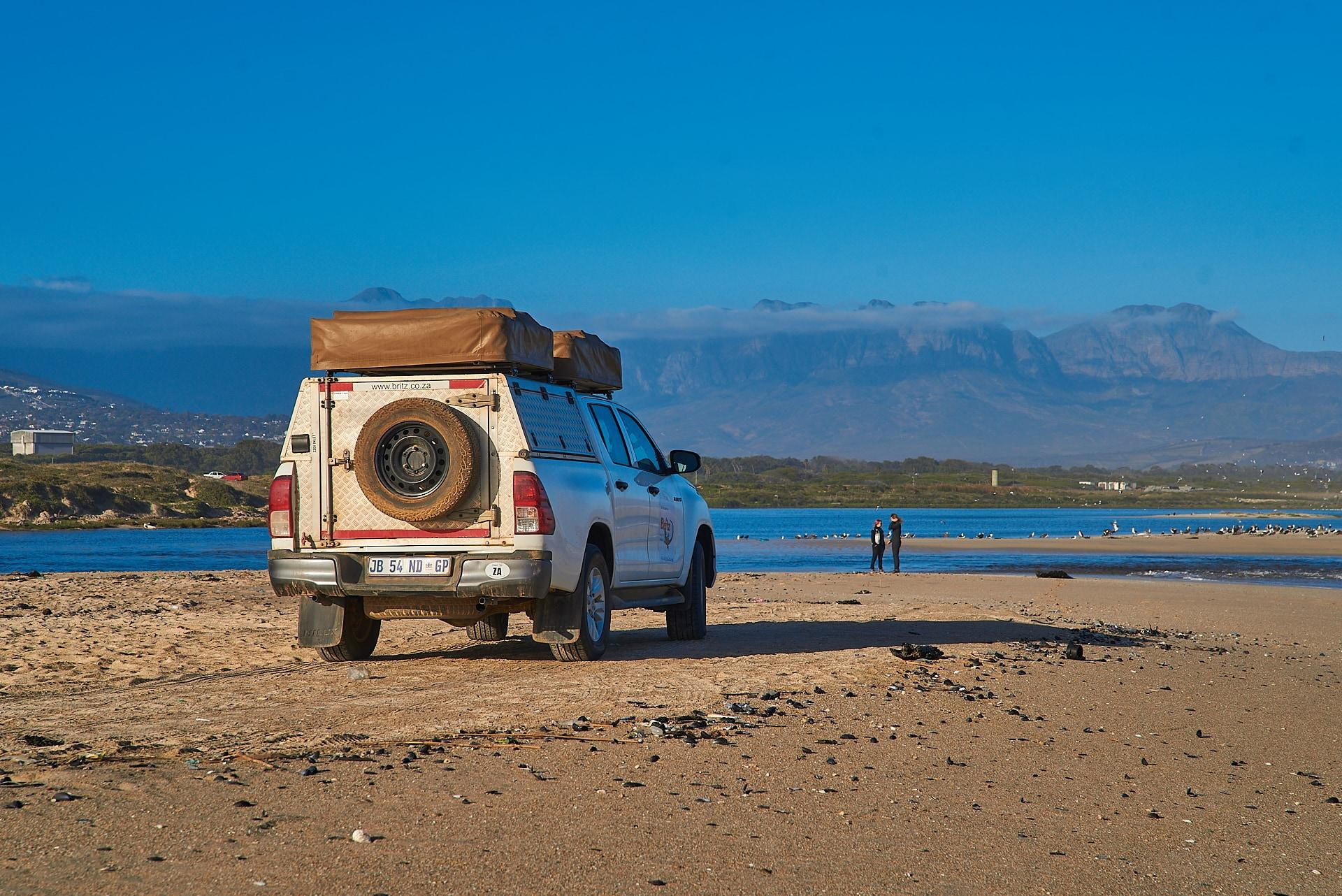
The thing is, I seem to hate sightseeing. I take photos of the sights, post them, enjoy them, but they leave absolutely no mark on me. A week later it all blurs together and I've forgotten it.
I started traveling for the experiences. And new experiences rarely happen at tourist attractions. They happen when you see “another world” and start to feel that it's real, to get your hands on it and explore it.
And in that respect Africa was like going off the high dive into a pool of holy fucking shit.
Our ride through the dunes in a jeep, our “tour” of the local slums where it's downright dangerous for a white person to walk around, the local Burning Man out in the desert, then decompressing in a penthouse overlooking the sea.
I can still remember those moments more clearly than I can remember what I did yesterday.
Africa is epic. Sometimes it felt as though even the air in the distance turned opaque, that's how vast the spaces are. Norway, much as I love it, looks like a scale model next to Africa.
Africa is wild. You realize just how laughable and fragile your “first-world problems” are. And how the things you took for granted, like electricity, are things you have to go out and get for yourself here.
Now I dream of buying a little house there and going there for the winter. But first we need to get some kind of foothold in Germany.


For details of the trip, kindly proceed to the relevant post: South Africa 2022.
While we're on the subject of Africa, our trip to the local Burning Man deserves a mention of its own.
Until this year I had no idea there were regional burns besides the big, exclusive one in the US. Turns out there are Burner communities in every country, and a lot of them put on their own local events. Smaller in scale, but sometimes more intimate and cozy.
I like the format of a burn much better than your classic “summer festival” or camp. A standard festival is getting drunk to live music and then sleeping in a tent. Repeat for three days. That's it.

A burn adds a community element to all that. You're physically stuck together far from civilization with limited resources and ten commandments. You're a tribe. Sure, you've got a bunch of gadgets, solar panels, and weird costumes, but basically it's like you're the last survivors of a nuclear catastrophe (except nobody's killing anybody, for some reason).
That feeling is what people haul themselves halfway across the world for. I even tried to find something near home that felt as authentic, but nothing was quite right. Even at the “hacker camps” that happen pretty regularly in Europe and are also big on community, the rules flat-out ban anything wild that might actually turn people into a community. Silly, really.
So next year I'm thinking of finding a local burn somewhere in Europe and going to see what it's like.

In the four years I lived there (2014–2018), Vilnius really became home. Familiar streets I'd walked hundreds of times, good old restaurants where you could get great food for the price of a döner in Berlin.
I missed it. So this past January we decided to pay it a visit after all those years.
So much déjà vu. So many goosebumps. This was our office. That's the kiosk where I used to buy beer. This is Basanavičius Street, where we lived. God, I loved that street. It's only at moments like these you realize how bad you are at appreciating what you have, always rushing off somewhere, always complaining.


Life really was easy in Vilnius. At least back then. Awesome apartments, tons of places to eat or hang out, none of the crowds and lines you get everywhere in Berlin. Everything cheap and within reach. Even this time we rented a two-story loft for two weeks for just €350. Though I bet you won't find those prices anymore now that the war's started
On the other hand, yeah, it was great, but I'm glad it's over. I probably wouldn't want to live there now.
First, I've realized I really do like bigger cities. I like a bit of bustle, not taking it easy.
Second, even back then, five years ago, I was often disappointed by the way the local authorities acted and said so. Lithuanian politicians sounded to me like aggrieved teenagers constantly fighting “against something” — against cars, against tourist visas, against alcohol after 8 p.m. I can't remember a single time they were “for something.”
Unfortunately, experience tells me that when you have no values guiding you and all you do is fight everything around you, it always turns out shitty.
Case in point: my biggest disappointment was finding out they'd destroyed my favorite park, Reformatų parkas. Man, the evenings my friends and I spent sitting on those concrete steps, the photo shoots we did, the ideas that were born there. Even this blog was basically reborn there.
It was a half-abandoned park, all old-school brutalist concrete. We lived next door for three years and it became the place I'd go to recharge. I'd head there to think on my own, have a beer with friends (hiding our cans from the police), or pull out my iPhone and jot down notes that eventually turned into all those ideas you've seen here.
There were a couple of photos of it in the post about leaving Lithuania.

I was furious when I saw they'd demolished the whole thing to make some ridiculous little square with cheap benches, with all the charm of a park for moms out in the residential suburbs of Barnaul.
And guess what's right in the middle? Why, a fucking fake fountain made of cheap LED strip lights in the shape of a willy, of course!

I get that the locals have trauma around all things Soviet, but even in Berlin, fucked up as it was by the war, they don't destroy places like that. They turn them into cool public spaces.
At the end of the trip we even met up with some people we used to work with. Can't say it was a pleasant reunion, but it was worth a try.
The bow got a post of its own too. They even quoted it on Zavtracast!
I went out shooting at least once a week all summer. Even made some new friends who wanted to join me. Wrecked two targets and three sets of arrows. I'm happy.
It's cold shooting outside in winter, and I haven't found a club yet. But I'm already starting to miss that lovely feeling when you put an arrow in a circle the size of a matchbox from fifty meters away. It doesn't seem like that should even be possible. So my worries haven't panned out so far: archery really does get you hooked.

Madeira is an island in the Atlantic, somewhere near Portugal and Morocco. Sort of the Portuguese Canaries. I'd wanted to go for ages, and last winter we planned a winter escape: go live there for a whole month to salvage a bit of our sanity from the gray, wet Berlin winter.
So we went in mid-February. I think you can guess what happened next =/

But even setting aside those two weeks of hell and doomscrolling, Madeira isn't quite my kind of place. I liked the neighboring Canaries better.
The good things about Madeira:
✅ It's very photogenic. I'll stick a video by Denis Barbas below. He filmed pretty much every sight on the island in beautiful mist and set it all to epic music.
✅ It's green. The Canaries are volcanoes and deserts. Madeira is one big green mountain covered in all kinds of forest.
✅ It's home to the most dangerous airport in Europe. There wasn't room for a big airport on the island, so they extended the runway on stilts straight out over the sea. Pilots do two years of training to get licensed to land there. And yes, that's most likely where you'll fly in, because you don't have much choice — it's a fucking island. Landing there feels fucking incredible. Recommended.
The locals who treated us to their homemade sugarcane rum very kindly asked us not to call their airport “the most dangerous.” They prefer “only the best pilots get to fly to Madeira.” So don't say that!
The downsides of Madeira:
❌ The terrain. There isn't a single horizontal surface on the island. You're always either walking up a steep hill or down one. That's fun when you're a tourist, but by the second week of living there, having to hike a kilometer uphill to the nearest supermarket really gets on your nerves. Why not take the car? I'll get to that next.
❌ Expensive rentals, expensive taxis, expensive food. Renting a car in the Canaries costs a laughably small amount. You can find deals for something like €7 a day. Same on mainland Portugal: we got a souped-up Mini Cooper Works for €15 a day.
On Madeira, even in the off-season, all we could find was a beat-to-shit stick-shift Peugeot for €40 (!) a day (and we were looking two months ahead). For a decent car they wanted €150 (!) a day, and that's not some fancy Sixt, that's fucking Budget/Europcar. We needed the car for a month, remember. That's SEVERAL THOUSAND FUCKING EUROS A MONTH JUST FOR THE CAR. Have you completely lost your fucking minds?
❌ Once you're sick of hiking, there isn't much else to do on Madeira. We spent the first week exploring, saw the whole island, even checked out a couple of abandoned places off the tourist trail. By week two we had absolutely nothing to do, but we made up for it with trips into Funchal (the only big city) and visits to the local bars. By week three we weren't doing anything at all, just working from home and doomscrolling. You can't even hop on a boat to a neighboring island like you can in the Canaries. They're all too far away!
Long story short, next time I'd rather go back to Lanzarote.
When TJ shut down, all it left was a gaping black hole. Nothing. Nobody's come anywhere close to filling that niche: making an online publication that didn't suck. It feels really empty without it. Like we've lost a piece of our internet heritage.
Nobody's going to recap the most cursed tech Twitter threads for you anymore, or publish an expert review of mole-infused vodka, or explain the latest zoomer news in plain language. Now you have to figure it all out yourself. Or, more likely, not bother.
Without TJ it's like we've lost the pulse of the internet. Everything that mattered used to show up there. Now it feels like everybody's on their own.
We even thought about trying something similar at the Club, hiring a “news editor” to keep up with everything that was happening and write about it, but opinions were split. For all that TJ had an absolutely fantastic editorial team, its community was incredibly toxic (once you no longer had to pay to comment), and a lot of people held that against it.
Still hurts. Thanks again to everyone who made TJ over the years. It was great.
For the first time in my life I was offered an extended break on the company's dime and the chance to switch to a four-day week to keep myself sane through tough times. I decided to give it a shot.

The sabbatical was pure bliss. I got all modest, of course, and only took a month. Some people I know took three. Having done it, I'd say one month really isn't enough to “reboot” your life, but if that's what you're offered, take it! It clears your head about as well as changing jobs.
I spent a lot of time with friends, got into woodworking, worked on the Bus, and took that two-week road trip through the Balkans I'd wanted to do for ages. Didn't touch a line of code, but ideas started coming to me all on their own. The most fucking awesome experience of my life.
My head was much clearer when I got back to work, and I even managed to survive a few more changes of manager and rounds of workplace drama.
The one downside: take a long sabbatical, say three months, and you risk coming back to a completely different company. You might spend so long getting acclimated and finding your place again that it undoes all the good it did you.
Weigh that risk. If you work for a big corporation, you probably won't care. At a small company, a hell of a lot can change, and not always for the better.

When I got back to work, I decided to switch to a four-day week. It's common and legal in Germany, and if you've worked somewhere for over a year, you actually have a legal right to ask your employer for a four-day week (32 hours instead of 40).
They cut your pay proportionally too, which is the main downside :)
It usually doesn't hurt quite so much if you work in tech, but we're looking to get a mortgage, which means the money's going to matter more before long. It didn't affect my credit rating when I applied for a mortgage, by the way. They just asked why my salary had gone down Anyway, I spent four months on a four-day week, so here's what it was like.
All in all, I'd call the experiment a success. I'll definitely do it again.
One more tip: if you're interviewing at a great company, you really want to work there, but they can't afford the salary you're asking for, suggest they hire you for four days a week. You get a cool new project and a bonus day off, and they get an incentive to pay you more in the future.

At the beginning of the year, Google announced yet again that it was evicting all the legacy users with custom domains who weren't paying it as business customers. It had been trying this for a couple of years, announcing things and then taking them back. Apparently it walked this one back pretty soon too, but by then I'd already migrated everything to a paid third-party service.
If I'm going to pay somebody, it sure as hell isn't going to be Google.
It mostly came down to Fastmail and Mailbox.org. More security-focused services like Proton Mail and Tutanota were out of the running straight away because their support for third-party mail clients is poor. I've got a dozen email addresses going at once and I don't want to keep a separate browser tab open for each one. I pull all my mail into apps that handle multiple accounts, so proper syncing across devices matters to me.
The move was a lot less painful than I'd expected. All I had to do was update the DNS records and mail started landing in the new service right away (calendar invites included). For the old messages, I used the built-in option they all have for importing mail from another inbox. Genuinely a couple of hours' work one evening.
The funniest part was reading ten-year-old Gmail messages. I'd been using that address since way back in 2008, so there was all kinds of interesting stuff from the early internet and my baby freelancer days.
The only downside I've found is that Fastmail's spam filter isn't as good. It reliably lets one blatantly obvious scam through every week. But it does seem to be learning, which is nice.
At the start of the year I published a post called Unstoppable Web, exploring how we'll survive when the internet splits into pieces at war with one another (which has already started).
After looking into various services, I set up a proper Mastodon account and even added it to the list of official accounts on this site. My tweets get cross-posted there, but there are already actual discussions too, and a couple of times some unhinged Nazis with Soviet flags even showed up. Typical Fediverse.
Towards the end of the year the subject got popular again when Elon Musk bought Twitter and started running amok and breaking everything.
Honestly, I like Mastodon on a technical level, but I'm convinced that as it gets more popular those same unhinged radicals will quickly ruin it. Like what happened with Gab back in the day. Because it doesn't solve the biggest problem with today's social web: moderation.
Still, I have high hopes for the Fediverse as a whole, and I'd really like to try adding ActivityPub to the blog and the Club. I have some ideas for making all this a little easier to moderate and make sense of, but I'm desperately short on hands and time, and this year my time went on other problems.

Speaking of decentralization, here's why I got so heavily into the Fediverse, self-hosting, and all the other geek stuff that's supposed to help you survive when full-on balkanization sets in.
My biggest problem this year was accounts getting blocked left and right. I'm afraid to open my email in the morning now, because there's bound to be a message from yet another service that “can no longer do business with you” and “is keeping all your money.”
They even blocked the main account my salary goes into at my German bank, with all the money I'd saved for a down payment. It took me a month to prove I was a German resident. And even then I had to find “connections” at the bank so I could sort it out directly with a senior manager. Thought there was no cronyism in developed Europe, did you? Like fuck there isn't.
I know, serves us right, fucking Russkies.
PayPal fell first. They immediately blocked all my accounts with no way to withdraw the funds.
The banks joined in with the second sanctions package. The EU specifically said the sanctions weren't supposed to affect EU residents, but everybody ignored that part in unison. Ignored it so thoroughly, in fact, that Deutsche Bank stopped opening new accounts not only for Russians and Belarusians but for Ukrainian refugees too. Who the fuck can tell all those Slavs apart, right?
The whole thing turned into a circus. There was no way to save everything, so we tried to save at least the most important accounts and pull the money out of the rest. The whole “don't keep all your money in one basket” strategy worked against us here, because now we had to juggle all those baskets like hot potatoes.
Crypto to the rescue, right?
Like fuck. Somewhere around the seventh sanctions package, the EU ordered crypto wallets banned for Russkies too. Yes, there was an exemption for residents in that one too, but if even the actual banks hadn't read it, what could you expect from the dumbfucks running crypto exchanges?
Sure, keeping crypto in cloud wallets is an antipattern, but centralized exchanges had one thing going for them: crypto payment processing. We used Coinbase Commerce to collect Club dues. It generates a separate address for each transaction, collects all the payments, and once every month or two you withdraw them to your own address. Well, that account got nuked out of the blue too, with no way to withdraw the money.
In the next section, though, I'll tell you how cyberpunk happened and I got my account unblocked after all.
It blows my fucking mind how, the moment a crisis hit, all the “first-world” countries instantly reverted to good old-fashioned Nazism, while the “second world” started showing extraordinary hospitality and humanity. I don't have another planet to offer you.
One last example of this fucking circus: one of the sanctions packages banned Russians from flying drones in the EU. Except they forgot to put in an exemption for residents. So yes, technically, if I pick up a drone right now, that's a criminal offense in Germany.
In this increasingly techno-pessimistic world, I can't remember the last time so many people were so genuinely delighted by a new technology. Not just tech bros, but regular people signing up for accounts and playing with a neural net like kids with their toys.
My own minute of ChatGPT fame came when I used it to get my Coinbase account unblocked, the one they'd nuked because of the sanctions against Russkies. Support had been fobbing me off with canned replies.
The tweet even went viral and got picked up by a few news channels.
As for how I see the future, personally I'm optimistic for now. No, ChatGPT isn't going to replace Google. It knows a lot, but it's constantly bullshitting you. A lot of people are starting to realize ChatGPT is like that friend you had as a kid who loved showing off with stories about how he went to Disneyland over the summer, and next year he's flying to Mars, his parents have already paid.
I wouldn't trust a guy like that. Stack Overflow has even banned ChatGPT-generated answers because most of them contain complete nonsense.
The good news: us humans will finally have a real AI companion to help automate chores like writing formal letters, résumés, term papers, and other nonsense we should've done away with ages ago. That's a hell of a lot more useful than all the Siris and Alexas.
The bad news: looks like we're in for a new wave of “spam.” Humans are going to have a lot of extra work figuring out whether the thing writing to them is a real person or a bot.
At work, for instance, we've already had several very “credible” looking security reports come in through our bug bounty program that ChatGPT had simply made up. We always had Indian schoolkids piling in, but their nonsense about a missing X-Frame-Options header on the website used to go straight in the trash at the first screening.
Now it all looks a lot more “real.” The neural net even included snippets of code to reproduce the vulnerability. And the code actually runs! The problem is the code doesn't do a damn thing. It just looks scary, but by then a bunch of expensive security analyst hours have already been spent talking to a robot operated by yet another Indian schoolkid.
And it's only going to get worse. Because there are a billion Indian schoolkids and only a handful of security specialists.
Soon the same thing will start happening with résumés. No, I'm not giving you ideas :)
Phonk was the soundtrack to my year. Something about some guys mumbling into a 100-ruble mic over a steady beat helped me focus when things got hard, or just pass a couple of hours behind the wheel.
Like all Slavs, I started out with drift phonk and TikTok phonk, currently the two most popular and most hated subgenres, since they're really easy to make and the public music libraries are full of them.
But I got fucking sick of them pretty quickly. Remember that “generic music from GoPro and Red Bull videos where sporty guys do sports really hard”? So I kept digging into the genre until I finally stumbled across the early “fathers” of phonk from the ’80s.
Three 6 Mafia were my favorites. Here's the track I like best to give you a taste.
And here's an example of modern drift phonk. A real shot of energy straight up the ass!
And here's a pretty good video I came across by chance that finally helped me piece it all together and track down the sources. If YouTube won't let you watch it on the site, click the “Watch on YouTube” link.
“Don't lose your nerve, kid. You only live twice. If I can come back, anyone can.” (c)
When the old man dropped his third mixtape after five years of silence, everyone bitched that it was just rerecordings of old tracks (fuck, it even had vintage Londongrad on it!). Then the old man dropped an album. It was great, but nobody understood a thing. Then the old man started banging out anti-war tracks on Fridays, and that's when, in my head at least, a picture of the “new Oxxxymiron” started to come together. Sober now, and just as pissed off.
Hard to pick one favorite track, so I'll leave a few here.
My most-played track off the mixtape: “The Organization.” A proper anthem for “foreign agents.” Should've released it into the public domain, really.
Off the album: “Hop Mechanics” (had to learn all those double rhymes by heart again).
My favorite of the anti-war songs is “February 23.” The line “And still, there's something appealing about being alive. Five in the morning, and I'm out cold in her arms” still fucking wrecks me.
The main lesson, though: it doesn't hurt to leave and come back. People on the internet will make some fart noises and forget about it. What they'll remember is what you did, not the hype.
Watch out for vas3k.Inside 2023.

Like any self-respecting geek, I love science fiction. I used to be really into Asimov's short stories (a few made it into previous years' reviews), but this year I discovered Chinese sci-fi by Liu Cixin.
I'm not that into the spaceships-and-shootouts kind of sci-fi. What I like is the science part: an author asks “What would happen if...?” and then lets that world unfold according to the actual laws of physics, society, and the universe.
Liu Cixin is Asimov and the Strugatsky brothers turned up to eleven. I won't pass judgment on the science; the physicists can fight that one out. But the way he took it in a social direction gave me goosebumps.
The whole idea of gaslighting humanity into distrusting our own science by slipping “errors” into fundamental experiments is so powerful. Humans immediately start fighting, killing each other, and inventing new “faiths” for themselves. A known weakness of ours as a species. The author's grasp of propaganda and psychology is seriously impressive (what did we expect, a Chinese guy wrote it).
The book has a bunch of sequels and even fan fiction, some of which the author personally approved and made officially canon.
I'm only a book and a half into the trilogy, but I'm told the story actually ends at the end. Extra respect to the author for that.

A book based on a true story and interviews with a man officially diagnosed with a split personality. Only his didn't split in two, it split in twenty.
A pretty gripping story about a mentally ill man who would “switch on” different personalities depending on the situation. He lived like that for years until the police arrested him for crimes committed by one of those “personalities.”
By the end of the book you not only grow to love the main characters-slash-personalities, you even start thinking maybe you've got a whole cast of characters inside you too, taking turns at the controls of your reality. This one whines, this one writes blog posts till one in the morning, the third one's a lazy bum. And they're constantly switching places.
I also highly recommend his Flowers for Algernon. There are references to it in Milligan.

One Hundred Years of Solitude by García Márquez is in my top three favorite books of all time. And this year somebody told me he'd written others :D
The Autumn of the Patriarch follows the last years of a dictator losing his marbles in a fictional hot Caribbean country. Except it's not another dystopia. Quite the opposite: it's a surprisingly warm novel, where the author almost seems to feel for the tyrant in his loneliness, in the twilight of his life, describing in great detail how fucking sick he is of it all and how he just wants beautiful women to dance for him at his aqua disco.
In short, The Autumn of the Patriarch is a book about Putin.
When you realize how many parallels there are and how nothing's changed in the past century, you laugh out loud. Then it's kind of warm and comforting to think that none of this is some diabolical master plan worked out to the last detail. It's just a very tired old man losing his mind. And one day he'll croak.
In last year's review I praised the movie Snowpiercer, and somebody in the comments mentioned there was a TV series too. I figured it'd be more derivative crap, but it turned out to be even better than the movie.
I remember a comment that got a ton of likes: “I wish Snowpiercer had a sequel that showed us not how they seized power, but how they deal with the fucking politics afterward.” And that's exactly what the series is about. It's not enough to just “win.” That's when the real work starts, and if you don't do it, there's another revolution coming.
The series does a great job of showing how different people's values can be, how strong leaders manipulate a crowd, how the “good guys” end up with blood up to their elbows when all they thought they were doing was standing up for their “good values.” Practically a political science textbook.
And every new season gets more dramatic. Can't remember the last time I was this delighted by each new twist.
Nothing else they made this year really grabbed me.

