Researchers at the Federal Institute for the Metaphysics of Likes have proven that the phrase “A Trip to Iceland” stimulates follower growth and causes the internet masses to secrete copious quantities of likes. So if you want to be a popular Instagram travel blogger, get yourself to Iceland, pronto. Meanwhile, it's my turn to break out my set of contrast-killing VSCO filters and write about how the geysers make this funny whoosh. Actually, no. Most of this post is about the nuts and bolts of traveling to Iceland, with tips and things I learned along the way, since that's what a lot of people were asking about.
The trip started the usual way: on that Skyscanner page where you can just pick a departure city and leave the date open. Aviasales still hasn't gotten around to anything that convenient. All they've got is their weird, unusable “low-fare map.” Once I'd picked February, selected direct flights, sorted by price and ruled out cities I'd already been to, there wasn't much left: Reykjavík or Ashmyany. It was a tough call, but Reykjavík won by a nose. At peace with my decision and feeling no particular emotion about the tickets I'd just bought, I went to bed. And that's how Iceland happened.
Sygic Travel can generate a PDF with an itinerary for each day, just like the one I made myself for my Eurotrip, only automatically.
Once I'd woken up and sobered up, I realized my chosen destination wasn't quite as straightforward as it had seemed the night before. But quitting is for wimps, and I'm Fyodor fucking Konyukhov. I've seen the harshest places on earth: Łódź, Kochenevo, even Panevėžys. What's Iceland to me? I'll manage. Hostel on Booking — easy. Still had the offline maps from the Eurotrip. Rent a car — done. All that was left was to sketch out a rough list of places to see. For that there's good old TripAdvisor, or a service I recently discovered called Sygic Travel. Taking my time, I spent nearly a week on all this, but if you're unemployed or highly motivated, you can do it in an evening or two. Assuming you've planned this kind of thing before.
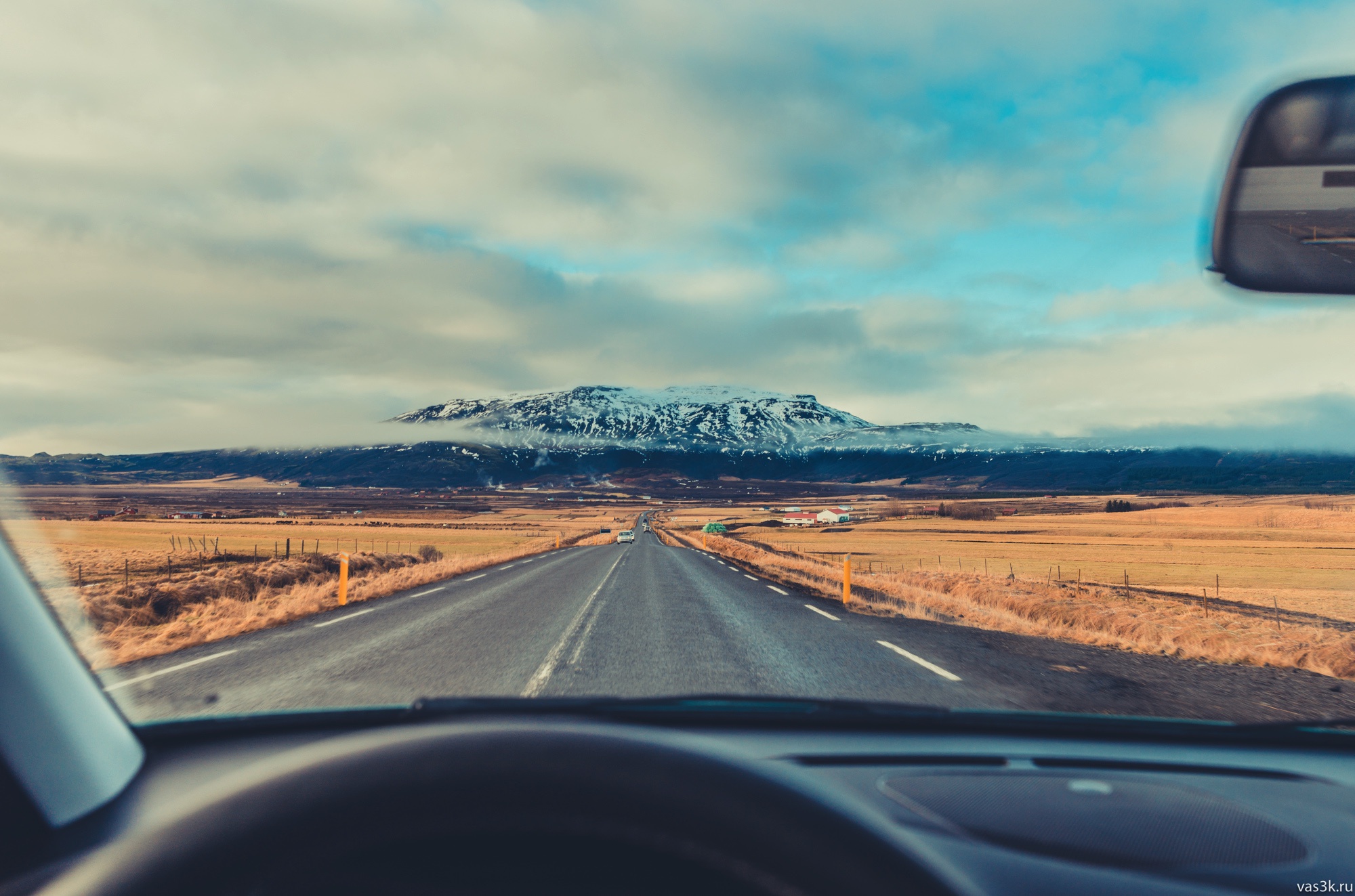
The Blue Lagoon is right by the airport. Every review quotes €50 to visit, but what they don't tell you is that the half where nobody swims is completely free.There are so many beautiful places that by day two you're sick of stopping every time and start getting good at taking photos on the move.They should put this sign right at the entrance to Iceland and make it the constitution.
What to do in Iceland
Iceland is a huge, mostly empty volcanic island sitting right up against the Arctic Circle, on the rift between two major tectonic plates: the Eurasian and the North American. It looks so unlike anywhere else on the planet that it gets a lot of attention. That and the president, who recently proposed banning pineapple on pizza.
Iceland sits right on a tectonic rift
If I had to sum up a trip to Iceland in a few words, I'd call it “the demo of Surviving on Mars, on easy mode.” For all four days I couldn't shake the feeling that this really was a different planet. It starts a few minutes before landing, when the plane drops out of the low clouds, gets battered by a gusting crosswind and somehow manages to touch down on the runway at Keflavík Airport.
Iceland is volcanoes, waterfalls, geysers, northern lights, strange terrain and vegetation, harsh, fickle weather, no people or animals in sight. Even the colors around you are different. It's like someone shifted the whole palette in Photoshop by messing with the Hue/Saturation sliders.
And it's “on easy mode” because the routes are well tested and it's hard to get yourself into a situation you can't get out of. Even a well-padded member of the middle class who's used to warmth and comfort can find a route that won't put them out. The die-hard survivalists and mountain climbers, meanwhile, just take a mountain bus, a huge jeep or a bike and head a couple hundred kilometers into the wild part of the island. There they can play “survival” to their hearts' content with tents and canned stew, filtering their own piss in the hardcore wilderness.
You should go to Iceland if you can't stand museums and tourist attractions, and the words “all-inclusive” make you vomit uncontrollably (like me). If you don't mind sleeping in the same clothes for three days, and your idea of a nice dinner is a Berlin döner or a €2 bottle of Spanish wine. Go if you're sick to death of European cities all looking the same, and Asia is far away, expensive and smells bad.
Who wouldn't I recommend Iceland to? Apart from anyone who disagrees with the above, I wouldn't recommend it to a total beginner who's never been outside their village. Start with any other European city. Come visit me in Vilnius, for instance. Sure, you might even have a good time in Iceland, but without a bit of experience you'll miss so much stuff and leave so much unseen that you'll have to go again. I definitely wouldn't recommend Iceland for trips with “fashion chicks” or kids. The absence of both is a huge plus for Iceland.
A lot of the cool spots are a long, hard trek. It hurt to watch a dad heroically lug a crying child on his back for 4 km through the mountains to see a pissing waterfall. As for the fashion chicks, let them go shopping in Milan and Instagram the one photogenic angle of the cathedral in the main square #fashion #beauty #nailsofinsta #dolchekabana.
Iceland is no leisurely stroll through the streets of Marseille. “Trek 10 km across a rocky desert” is on the list of daily adventures even if you have a car.
Mini geysers. The word “geyser,” by the way, was just the name of one of the springs behind me (Geysir). Then it became a household word, like “Xerox.”
Fjords without a single tourist. They're all driving around the Golden Circle.
When to go
Iceland may sit right up against the Arctic Circle, but the Gulf Stream you remember from geography class reaches all the way up there. It's been Making Europe Great Again for centuries now, and keeping its winters short and warm.
Travel sites divide the year into summer and not-summer, but Iceland actually has three seasons.
Winter — mid-November through the end of January. During those two or three months, snow buries the roads and trails. They work hard to clear it, but I wouldn't recommend those months to anyone except the die-hard survivalists from the previous section and extreme photographers chasing brilliant northern lights and those rare shots that 500px is absolutely full of. Another upside to winter is the complete absence of tourists getting underfoot. Winter Iceland is pristine, but brutal. A Siberian winter will feel like a resort vacation by comparison.
Summer — early May through the end of September. This is when Iceland positively drowns in tourists. Especially during the three calendar months of summer. Asian tourists swarm all the famous sights like locusts, the roads are a solid stream of rental cars and buses, the parking lots and campsites are packed. Everything everywhere in Iceland costs about 1.5 to 3 times as much then. You can see it pretty clearly on the Blue Lagoon website. The big upside of summer, though, is the good weather. Or, more precisely, the absence of the meteorological hell that goes on the rest of the year. The downsides: the prices, the crowds of Asians and the complete absence of northern lights.
Shoulder season — spring and fall. A bit of both other seasons. You still have a chance to see the northern lights, prices are down at winter levels and the roads aren't clogged with tourists yet. But now it's a lottery: Icelandic weather is completely unpredictable, with precipitation and cloud cover changing several times a day. You might get lucky and have summer sunshine. Or get my luck: rain every day, winds gusting at 20 m/s and clouds so thick you won't see any northern lights whatsoever.
Iceland's capital, Reykjavík, is a tiny village where hardly any buildings are taller than two stories.Here's Reykjavík's main street, for instance.
Three or four hours is enough to walk across it diagonally three times.Hallgrímskirkja is definitely worth half an hour (and yes, you just pronounced it wrong). Apart from being Lutheran, the church has the only great view in town.
A view of Reykjavík for 900 krónur (about €7)
Hallgrímskirkja from below. Wikipedia says the weird shape represents lava flows. Oooookay.
Icelanders build their new houses in a Scandinavian-looking style. I love it. It's my second favorite after modern German housing, even if neither looks particularly “fannncy” the way we like it back home
Guarded bike parking by the hotelThe opera house, built in 2011 and recommended by every guidebook
Pile up some pebbles and tourists appear instantlyYOU WON'T BELIEVE THIS, but that's a highway in Iceland. Kidding, obviously. It was actually Obama who trashed it
Checking out the locals' cars is a pastime all its own. Specimens like this are by no means rare. You'll see this kind of hell on wheels every five minutes. They even have buses on those tires! With gas at €1.60, I have no idea how they can afford to keep those things running
Getting ready for the trip
1Flights and visas. A reminder: Iceland isn't in the European Union. It is in the Schengen Area, though, so any Schengen visa will do. My Russian readers probably already know the tricks to getting one. Or ask your friends. In 2017 it's easiest to go through France or Italy. Flights are straightforward: loads of low-cost airlines fly to Iceland. Wizz Air flies direct from Vilnius, for one. Get yourself pretty much anywhere in Europe and fly from there. A one-way ticket will set you back €30–150, depending on the season and your luck.
2Getting around by bus. Iceland has roads and that's it. No trains, subways or hyperloops. That doesn't leave you many options: rent a car or buy bus tours. Let's start with the buses.
They've had years to get the tours of the main sights down pat. For about €100 they'll pick you up at your hotel and spend the day driving you around waterfalls and volcanoes. Another €50 buys you an evening northern lights tour, if the season and the weather cooperate. There are several routes and you can't see everything in a day, so you'll definitely need two or three bus tours. It's comfortable, there's Wi-Fi, the driver takes you where you need to go, there's coffee and cookies, and you don't have to plan a thing in advance.
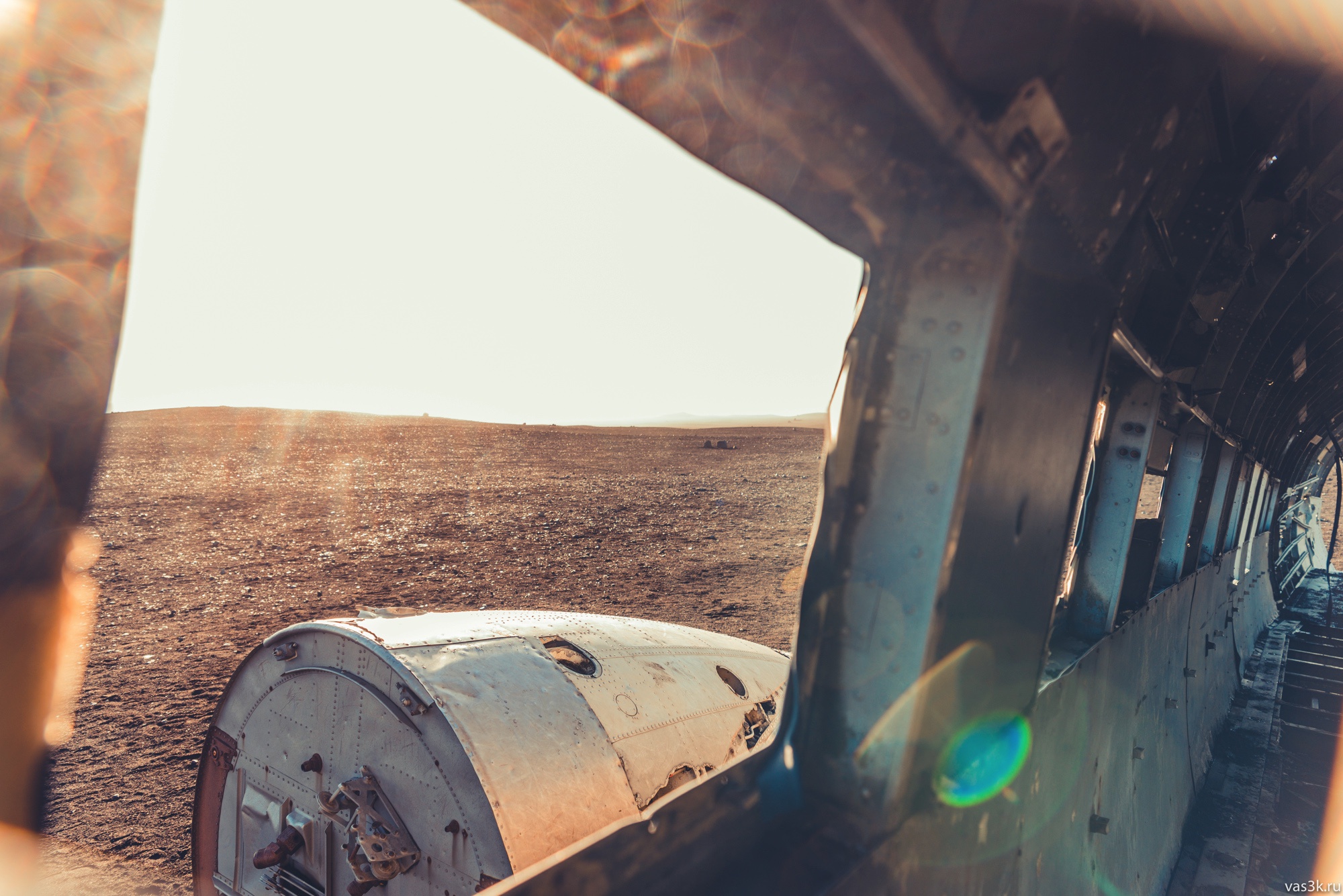
Do the math, though, and you're looking at €100 a day and up for a strictly touristy ride around places packed with people. No freedom, no “let's walk 10 kilometers along the beach,” no “let's have lunch on a bench on top of a mountain” or “let's drive around some remote villages and fjords.” Most of the cool places take too long to explore for a bus to sit there and wait for the whole crowd. It just skips them. The downed plane, for instance.
So if you've got a license and some driving experience, the same €100 will rent you a decent car with full insurance and you can drive wherever you want, whenever you feel like it. Why not?
3Renting a car. The base rate starts at €50–100 a day for the most basic hatchback. More in summer. But there's a lot more to it than that. Iceland's rental companies know cars are the most popular way to get around. Their fleets are so huge they take up two-thirds of Keflavík Airport. There's no point offering discounts on something that popular, though some of their marketing bullshit is good for a laugh: “Hurry, 95% of cars for these dates are already booked.” So what do you need to know about renting in Iceland? The rules are pretty much the same all over Europe, but here nobody cuts you a deal or any slack.
🚙 Broadly speaking, Europe has two types of rental company. First there are the “budget” shitholes. That's Avis, Budget, to some extent Europcar, and assorted little outfits you've never heard of. These guys rent you a car dirt cheap and make their money a week after you've left, when they suddenly discover a scratch and, having all your card details, charge you a couple hundred euros for “repairs.” I'll let you in on a secret: none of them bothers fixing it. They run their rentals up to 100,000–150,000 km and sell them on the used market. You wanted savings? Enjoy.
Sure, there are plenty of happy stories where it was cheap and nobody got ripped off. Somewhere in continental Europe — Czechia, France, Germany — I might even chance it. But Iceland is harsh and unpredictable: mountain switchbacks, dirt roads, sand and rocks. It's a serious gamble with a fair chunk of your money on the line.
💵 The second type is “luxxxury.” That's Sixt, Hertz and, again, sometimes Europcar. That last one's sneaky. It takes different forms in different countries. The “luxxxury” outfits have easy-to-use websites where you can pick whatever options you want, minimize your risk with insurance, see the price and exact model up front, and even manage your booking in an iOS app afterward. A friendly girl greets you at the counter, there's no mountain of paperwork and the terms are clear across the board. The car will probably be new and its driveshaft won't fall off in the mountains like in one photo report I saw. When you bring it back they won't go hunting for every last scratch. They'll let you go in five minutes and there's a near-100% chance you'll get your entire deposit back. As little risk to your nerves and your wallet as possible, at one and a half times the price.
🛣 If you plan on driving more than 300 km a day, you often have to pay extra for “unlimited mileage.” Otherwise they'll charge you €0.50 for every kilometer over 300 (or whatever your contract says). I averaged 500 km a day, but on day one, for example, I only drove from the airport to where I was staying, about 100. Give this one some serious thought, or just go unlimited and forget about the mileage.
💱 The agonizing decision when renting a car in any country is the insurance. Skip it, get a little, or pay through the nose for full coverage. Each has its pros and cons. Confident in your abilities, or want to save money with minimum coverage? Be ready to put down a deposit of up to €3,000 (!) that you won't get back for a month (!). And you might not get it back at all if they find so much as a scratch, even if it wasn't your fault. No credit card? Well, you're fucked. All of that money comes straight out of your account.
Maxing out the insurance doubles the rental price on the spot, but it has some serious perks. No deposit taken, no sweating over every pebble on the road, and you save a ton of time at drop-off: just hand over the keys and go have a coffee, casting smug glances at the line of people waiting for inspections.
In Iceland, though, full coverage is rare. The most coverage you can get means a €150 deposit and an extra €30 a day. It covers scratches, but not broken windows or scratches on the underside from “sand and gravel.” That last one's a popular fucking scam, since sand and gravel scratch the underside of any vehicle, even a bike. Decent outfits won't give you grief over it, though.
🚘 Insurance from booking sites is a story of its own. If buying plane tickets is easier through Aviasales or Skyscanner, why not rent a car through something like Rentalcars? These sites offer very tempting rates and their own insurance, often half or a third of the price of the rental company's. But read the “terms and conditions” on their website and it goes something like this: you take the car without the rental company's insurance, meaning you put up that same €3,000 deposit out of your own pocket. But if they happen to find a scratch and take all your money, you can contact our support team and we'll go to court (!) and try to get your €3,000 back somehow. Within six months. Or a year. Or eternity, who the fuck knows, we don't give a shit about you, you prick.
So do you need that, or is it easier to pay the rental company extra?
🗺 GPS units, child seats, sand and gravel protection — extras there's no point paying for. Sort out navigation beforehand, leave the kids out of your Iceland trip, and sand protection costs twice as much as the entire rental and makes no sense if you rent from a decent company. Those options are entirely up to you.
All in all, renting cars in Europe leaves a really bad taste in my mouth. Feels like I'm somewhere in Russia, where nobody trusts you, everybody wants a huge deposit and they're all trying to fuck you over. Somebody needs to build a STARTUP here.
4Weather. A rain poncho is a must for Iceland. This isn't a joke to make you look like someone selling cucumbers outside a subway station. I got along fine without it most of the time, but when I needed it I was thanking whoever told me to get one beforehand. Now I'm passing that advice on to you. You're unlikely to find one once you're there. One downside: the poncho gets in the way. Ideally you'd have a waterproof jacket (a windbreaker in summer), but that's a whole other level.
Besides the poncho, someone recommended a waterproof cover for my camera. But it seems the nearest place in Lithuania that sells this “marvel of technology” is Moscow, so I took some clear plastic bags. My camera bravely weathered everything the elements threw at it without any extra protection, but yours might not be as tough.
5Offline navigation. Even if you're used to buying a local SIM, don't pay roaming fees or happen to be a millionaire, Iceland will make you suffer, because not everywhere has cell service. No SIM card will save you. You need good offline navigation. As in my Year in Review, my friendly personal recommendation is Sygic. The Easter sales have started and you can grab the Europe map pack for €15 instead of €50, Iceland included. It only let me down once, which isn't bad for offline maps in these conditions. For getting around on foot, it's maps.me as usual.
6The food situation is bleak. Icelanders grow 100% of their food in artificial greenhouses powered entirely by “green” electricity. They're very proud of this, but for you it means one thing: food is hard to find, expensive, and only available in towns. To give you an idea of the scale of the problem: bread costs €5, a kilo of bananas is €4, and most foods you're familiar with just won't be on the shelves.
Planning to stop for lunch along the way? Sorry, this is Iceland. All we've got on the menu is volcanic ash.
Here's where your experience of stuffy open-plan sleeper cars on the Trans-Siberian Railway suddenly comes in handy: stock up on food that won't spoil. A few pointers: boiled eggs keep for ages in their shells, and two eggs will keep you walking all day. A packet of mixed nuts and raisins kills the hunger instantly if it suddenly hits you. Like a Snickers, only better for your beer belly. Boiled chicken keeps for several days in any conditions — now that's a true life hack. Ditto carrots and cucumbers. Other vegetables rot instantly; don't bother. Well-fried meat only lasts two days. Lavash flatbread lasts forever, way longer than regular bread. Canned food, obviously. Both on my Eurotrip and this time in Iceland, I used all of the above to make “shawarma.” Or a wrap, if that sounds nicer. Roll the whole thing up in lavash, wrap that in foil, and even without a fridge you don't have to think about feeding yourself for several days. In short, I strongly recommend stocking up on food before the trip.
The Blue Lagoon is Iceland's most heavily hyped projectIt's in every tourist brochure, and the very first giant banner at the airport invites you to head straight over
The first thing I heard on my way to the lagoon was “WELL, THAT WAS A GREAT FUCKING SWIM,” in pure Russian. Admission is around €50 per person, and spending more than 30 minutes in the water is about on par with dipping your hair in bleach.But they say this shit is really good for you
The lagoon stinks to high heaven. The closest thing to it is boiled eggs that have gone slightly off. Try sniffing the yolk next time you hard-boil an egg. Like that, only several times stronger. Probably the mineral shit that gives the water that color.But its biggest secret is that the whole much-advertised Blue Lagoon is completely fake. It's not a natural wonder or some amazing fusion of minerals and water. People made the whole thing for tourists. No magic of nature involved. Still pretty to look at, though. I stopped there again on the way back for some night shots.
What it costs
€50
flight
€20/day
hostel
€100/day
car
€1.60
gas
Iceland is expensive. We talked food two paragraphs ago. Now for what I spent altogether. Flights: €110. That's €90 there and €20 back, because low-cost airline pricing is fun. Hostel: €55 for three nights. Free parking, not downtown, because Reykjavík is so small that even from the very edge it's only a 20-minute walk. Food supplies and a rain poncho: about €40. And one tiny little thing: the rental car. €300 plus a €150 deposit (which I haven't gotten back yet). Whoa. Yeah.
I rented from the fancy outfit Sixt (see above for why), with an automatic transmission, maximum coverage (an extra €100), airport pickup (another €20) and unlimited mileage (another €50). Even so, that's considered very expensive. You can get an idea of prices here. Incidentally, as I'm writing this the same deal at Sixt already costs one and a half times as much: the bare rental for that class is €80 a day before insurance or mileage. Prices change daily. Follow the seasoned travelers' advice to “do everything in advance” and booking a month ahead can cost you more than booking a week out.
Then there's gas. At a whopping €1.60 a liter and average consumption of 6–7 liters per 100 km... brrr... basically, budget at least €100 per 1,000 km for a fuel-efficient little car. Big ol' JEEPS, of course, guzzle twice as much.
I strategically picked up the car right at the airport to avoid the €20 transfer into town. Paid the same €20 extra for the privilege, but saved on the return transfer and got to see the Blue Lagoon and the Tectonic Rift on the way.
I didn't buy much food in Iceland. Some extra nuts at a gas station, a morning coffee to wake me up, extortionately priced €7 fridge magnets, postcards and other souvenirs — spend or save as much as you like on that stuff.
Parking in most places outside Iceland's towns is free, which was a pleasant surprise.
As usual, automated gas pumps put an extra €100-plus hold on your card, which they promise to release in a couple of days. I wrote in my Italy trip report about why those fucking pumps are a traveler's worst enemy, but during business hours (8 am to 10 pm) they're easy to avoid in Iceland: fill up at big stations with shops and old-fashioned checkouts staffed by actual people.
Add all that up and I spent a little over €600 in four days. I could've saved a hundred on the car, but then I'd already paid for navigation and various other goodies beforehand. I got pretty lucky with the flights, too. Before the trip I read about someone who'd flown from Moscow the year before for a whole €500, and that was a good deal. Your total could go either way, but now you have an idea of what sort of money we're talking about. I hope. Ask in the comments if you want specifics.
One thing I only realized after the trip: I actually could've done the same routes by bus for practically the same money. So don't feel bad if renting a car isn't an option. Plan out your bus trips and transfers. They're all available online, and it's easier to get around that way since you're not spending your energy on driving. Especially if you're on your own or the weather's bad. For two people, a car already works out cheaper.
Head out early in the morning and there are hardly any tourists. The weather does slow you down a lot, though.
But then dawn breaks and you get all this beauty to yourself, before anyone else gets to see it
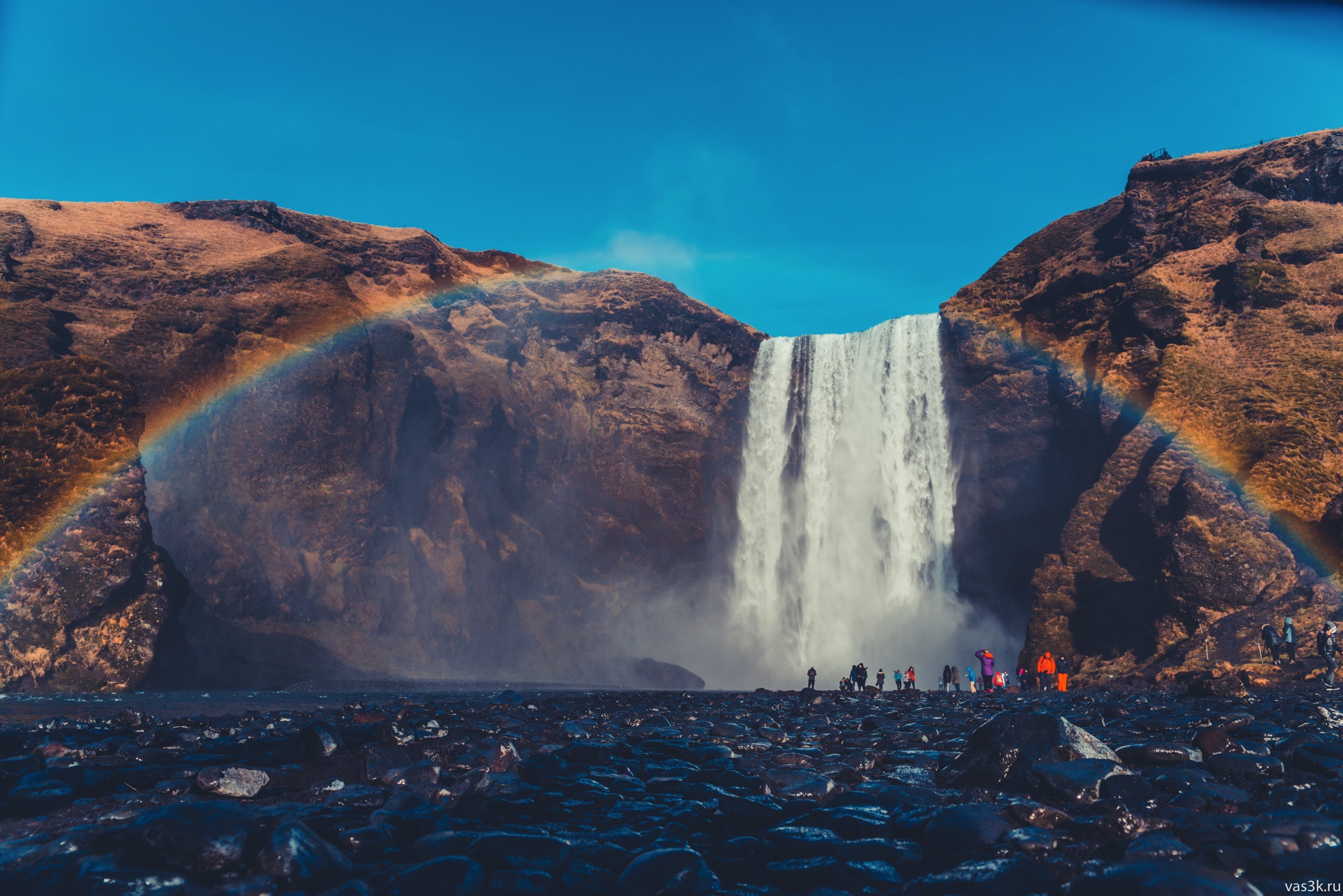
On to the waterfalls. There are a shitload of themThey're huge and awesome, and utterly boring in photos
Because you lose all sense of scale in a photo. You can only sort of imagine it from the size of things nearby. Roads, for instanceAnd geysers are waterfalls in reverse
So to hell with waterfalls. Here's a tractor
Or a broken Icelandic horse. Yes, that's a breed. Notable for its above-average hairiness. Why it broke in such an unnatural position, fuck if I know. Honest
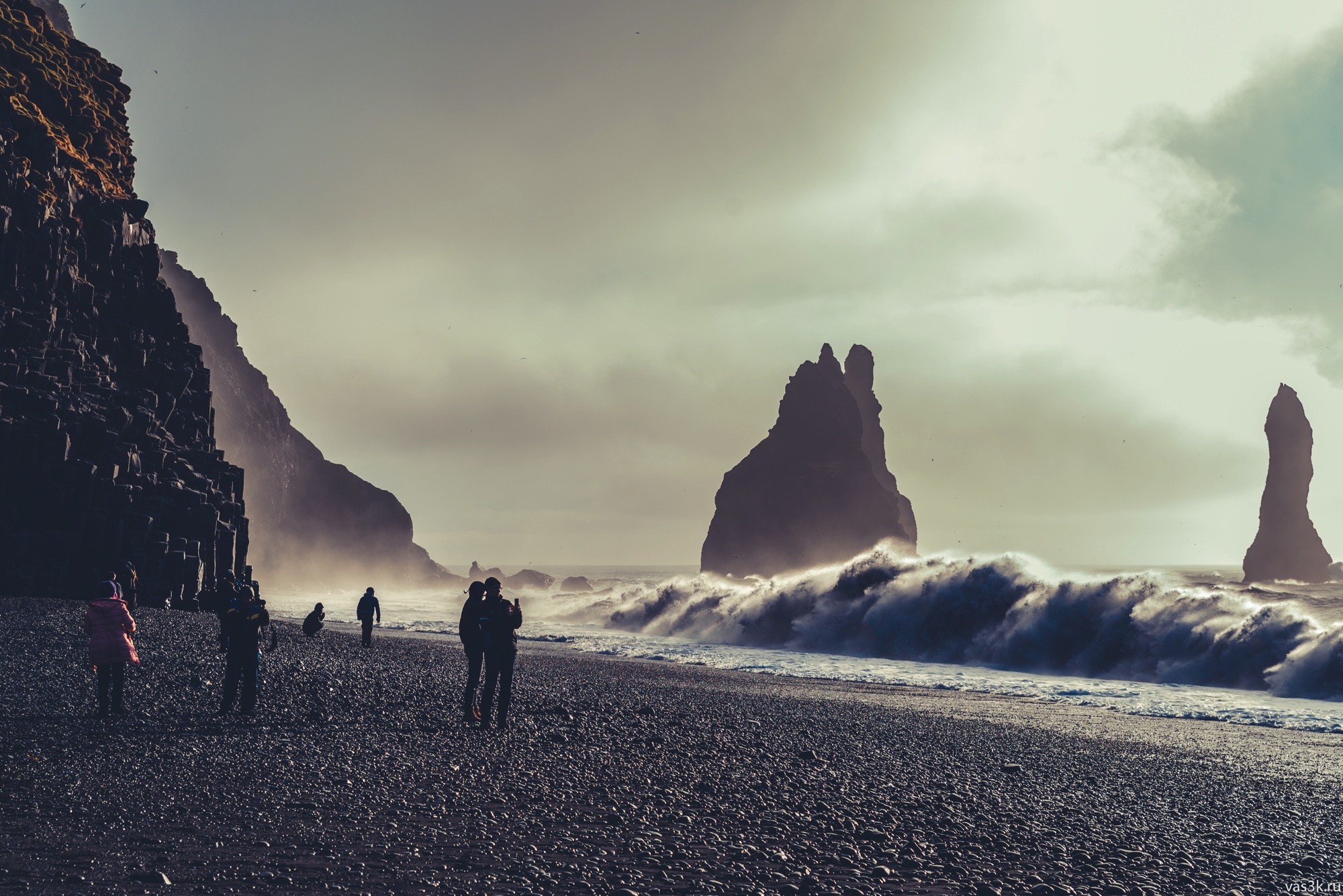
But the ocean beats everything else, as alwaysNo broken horse, tractor or waterfall comes close to the sheer scale of the Atlantic
Some waves are so huge they can knock you off your feet even 200 meters from the water's edge. Every eight to ten waves there's a “killer wave” that can be as tall as your Soviet five-story apartment block. The little dead-tourist icon really makes you want to give it a try!Of course I nicked one of these pebbles
Great view of the Moscow City skylineLET'S GO ROOFTOPPING
Another planet
Meeting actual Icelanders is no easy feat. Iceland's official population is just 300,000. That's only a little more than, say, Khimki. Meanwhile the number of tourists (as of 2016) is around 1.8 million and growing by about 50% a year. Most of the people I ran into at work were immigrants. Two Black guys ran the hostel, an Indian guy in a turban rented me the car, and the guy who took it back was a swarthy southerner who looked Spanish or Italian.
The default language is English. The only place you hear Icelandic is on the radio. It sounds like a mix of Lithuanian and Scandinavian: quick and funny, but with these drawn-out “o” sounds in the words.
Politics in Iceland is funny, too. Everyone's heard about the pineapple ban by now, but this quote from Wikipedia tells you everything you need to know about political activity in Iceland:
President Ólafur Ragnar Grímsson was elected on June 29, 1996. On June 29, 2000, he stayed on for a second term as there were no other candidates. On June 26, 2004, he was elected to a third term, and in 2008 he automatically stayed on for a fourth, again because there were no other candidates. In 2012 he was elected to a fifth term.
But one thing I did have time to notice about Iceland was how pleasantly easygoing and friendly it is. No signs telling you what not to do at every turn, no police, no guns, not even an army. Defense spending accounts for a whopping 0.1% of the national budget. Iceland consistently ranks in the top 20 on the Human Development Index, and in 2007 it was number one. No emigration. No religion either — instead of New Year's they celebrate the pagan Yule. They don't even have surnames, just patronymics.
Iceland remains an isolated country, off living its own life. An Icelander might happily hand you the keys to their car. Where are you going to go with it, off the island? When Icelanders talk about Europe, they say “over there, ON THE MAINLAND,” and they have no plans to join the European Union. In 2011 Iceland was named “the most peaceful country in the world,” and you can feel it.
A few more facts to take that “WHAAAT” up a notch: the population is so small they have a special phone app to check how closely related you are to each other. So the kids don't come out with horns. All of Iceland's electricity comes from hydroelectric and geothermal plants, most of them privately owned. Basically they stick a power plant on a volcano and make electricity from its heat. They recently put up three wind turbines too. Trendy. They don't heat their hot water at all — volcanoes and geysers keep it warm all year. They don't even filter it, which is why it often smells of hydrogen sulfide, like the Blue Lagoon. Alcohol was banned until 1989, dogs until 1990, and importing horses is still banned. Iceland has no insects (update: I've been corrected, there are mosquitoes in summer). And no cash. Only tourists use it.
I think it's a little clearer now why I call it another planet.
Officially, this is the rift between the two tectonic plates, the North American and the Eurasian. Other accounts say that's a story for the tourists and the actual boundary is way up in the mountains. Either way, it's an awesome place and it's huge. You can just make out the people at the bottom.
And this is the “bridge between continents.” It connects Europe and America. If that's true, that's awesome
Bye. Subscribe to the newsletter, by the way. It's the best way to tell me I'm not writing all this for nothing.
 Vastrik